Introduction
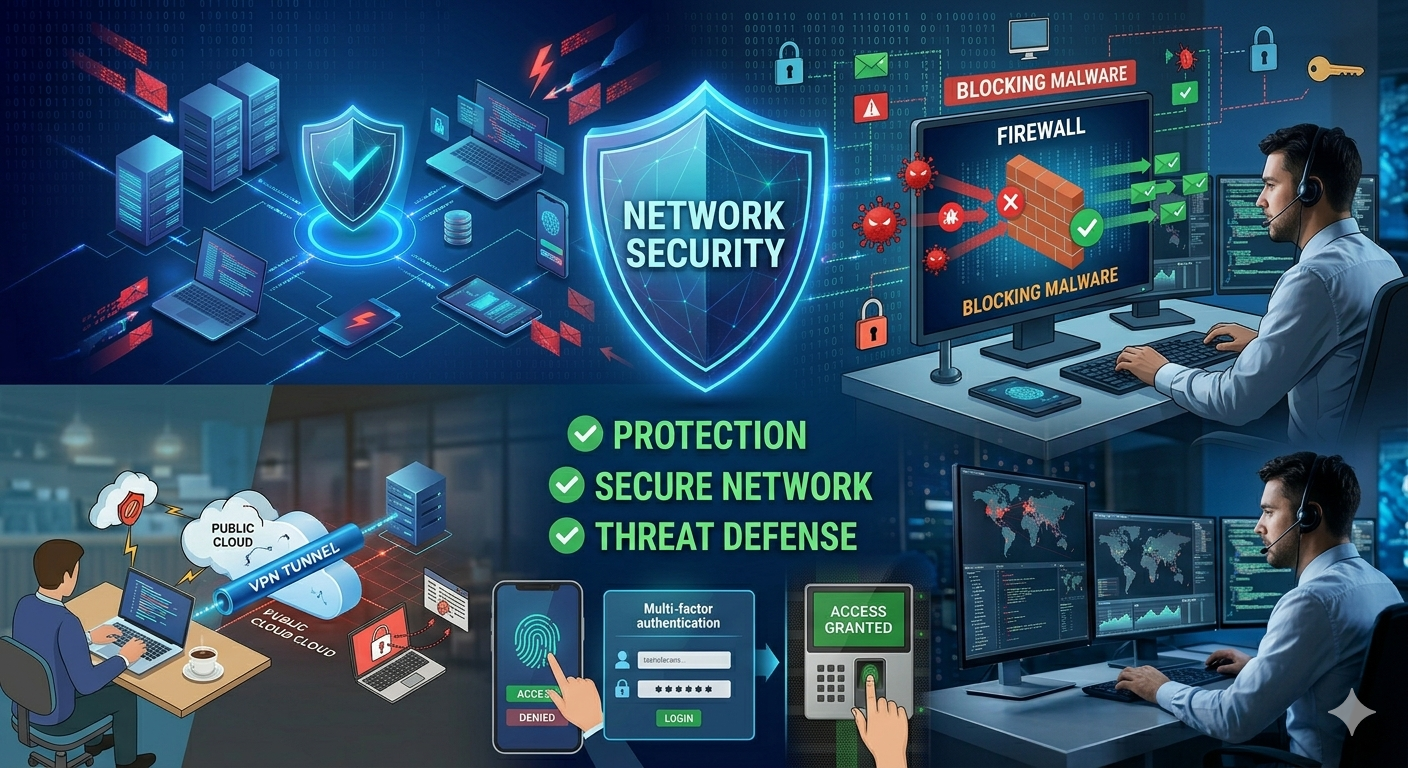
Almost everything we do today depends on the internet. We use it to pay bills, work from home, and run businesses. Consequently, our data is constantly moving online. This makes network security essential for protecting sensitive information.
At the same time, cyber threats are becoming more advanced. Every year, individuals and businesses fall victim to hackers. Attacks like phishing emails, ransomware, and unauthorized access are increasingly common. Even small mistakes can have serious consequences, which is why understanding and using network security is no longer optional—it’s necessary.
What Is Network Security?
This is the practice of protecting systems, devices, and data from unauthorized access or cyber threats. In short, it keeps information safe, private, and secure.
It uses various tools and practices that work together to defend networks. For instance, beginners can start learning the basics here: Learn Networking Basics.
By combining these measures, network security creates a strong shield against hackers and other malicious activity.
Why Is It Important?
It is important for several reasons:
- Protects sensitive information – Without proper protection, personal data, financial details, and business information can be stolen.
- Ensures smooth operations – Even short downtime from cyberattacks can lead to major losses.
- Builds trust – Customers and users rely on secure systems, which improves credibility.
Investing in network security is a smart and necessary decision for individuals and businesses alike.
Key Benefits of Network Security
- Protects data from hackers
- Prevents unauthorized access
- Blocks malware and phishing attacks
- Ensures smooth business operations
- Builds trust with users and customers
Clearly, strong that is not only protects data but also enhances reliability and reputation.
Types of Network Security
To build strong protection, multiple layers of security are needed. Each layer adds extra safety:
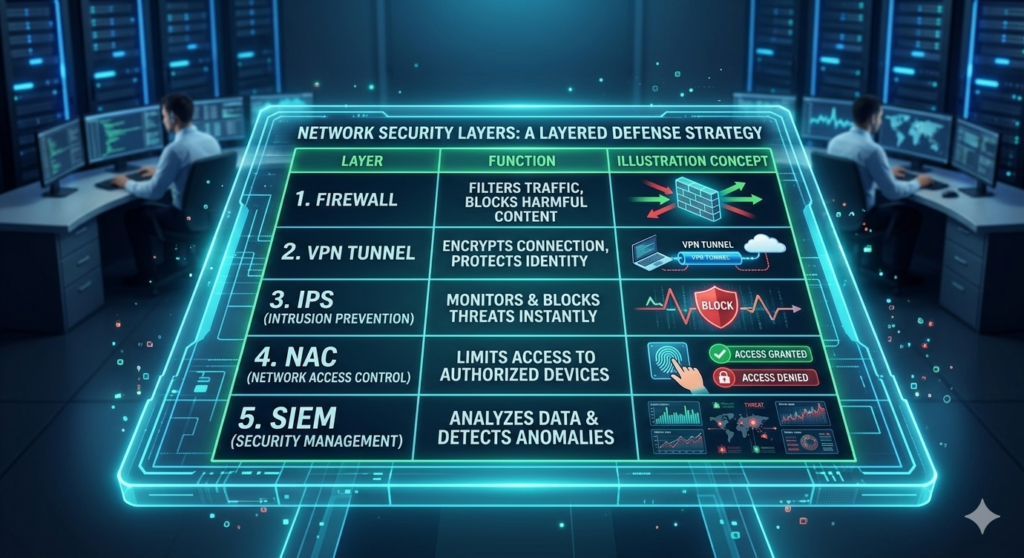
Firewalls
Firewalls act as a barrier between trusted and untrusted networks. They filter traffic and block harmful data.
2. VPN (Virtual Private Network)
A VPN encrypts your internet connection. This keeps your identity and browsing private.
3. Intrusion Prevention System (IPS)
An IPS monitors network traffic. If it finds suspicious activity, it blocks it immediately.
4. Network Access Control (NAC)
NAC allows only authorized users and devices to access the network.
5. SIEM (Security Information and Event Management)
SIEM systems analyze network data and quickly detect unusual behavior.
By layering security tools, if one fails, the others continue protecting the network.
Common Threats
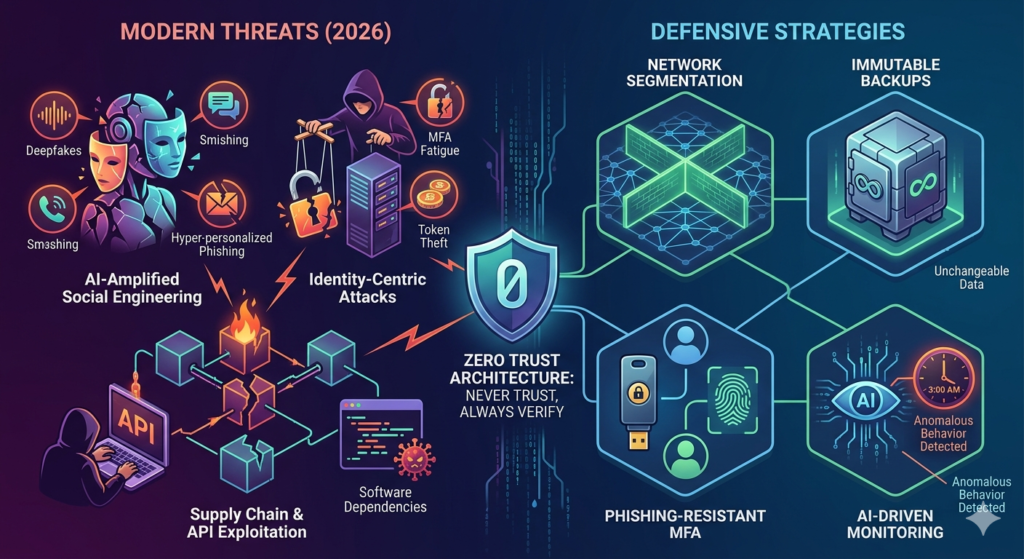
Even with protection, it’s important to know the threats. Knowledge keeps you one step ahead:
- Malware: Harmful software like viruses and ransomware
- Phishing: Fake emails designed to steal data
- Denial-of-service attacks: Crash systems by overwhelming them
- Unauthorized access: Caused by weak passwords or outdated systems
Learn more about cyber threats to strengthen your network defenses.
How to Protect Your Network
Here are practical steps to improve network security:
Practical Security Tips
- Use strong passwords and enable two-factor authentication
- Keep systems and software up to date
- Install firewalls and antivirus tools
- Encrypt sensitive data
- Educate your team about cyber risks
Read more: Cybersecurity Tips. Following these steps reduces the chance of cyberattacks.
Careers in Network Security
It is a fast-growing field. As cyber threats increase, companies need skilled professionals. Career options include:
- Cyber Security Analyst
- Security Engineer
- Ethical Hacker
- Information Security Specialist
Beginners may start with small earnings, but income grows with skills and experience. It is stable and rewarding.
Job Roles You Can Choose
- Cyber Security Analyst
- Security Engineer
- Ethical Hacker
- Information Security Specialist
Skills Required for Network Security
To succeed, you need the right skills. Key skills include:
- Network monitoring
- Threat detection
- Ethical hacking basics
- Security analysis
- Risk management
Gradually building these skills opens up more career opportunities.
Final Thoughts: The Future of Network Security
Cyber threats evolve daily. Therefore, Network Security is essential for protecting personal data and pursuing a successful IT career. Start your network security journey today by learning and applying these practices.
By staying informed and proactive, you can stay safe and secure online.
Frequently Asked Questions (FAQs)
Why is network security important?
It protects data, prevents cyberattacks, and ensures smooth system performance.
Are cyberattacks common?
Yes, around 30–40% of people and businesses face cyber threats every year.
What do we learn in this course?
We learn about firewalls, VPNs, IPS, NAC, SIEM, and threat prevention.
Can beginners earn in this field?
Yes, beginners can start earning and grow income with experience.
Where should we start?
At Adan it centers